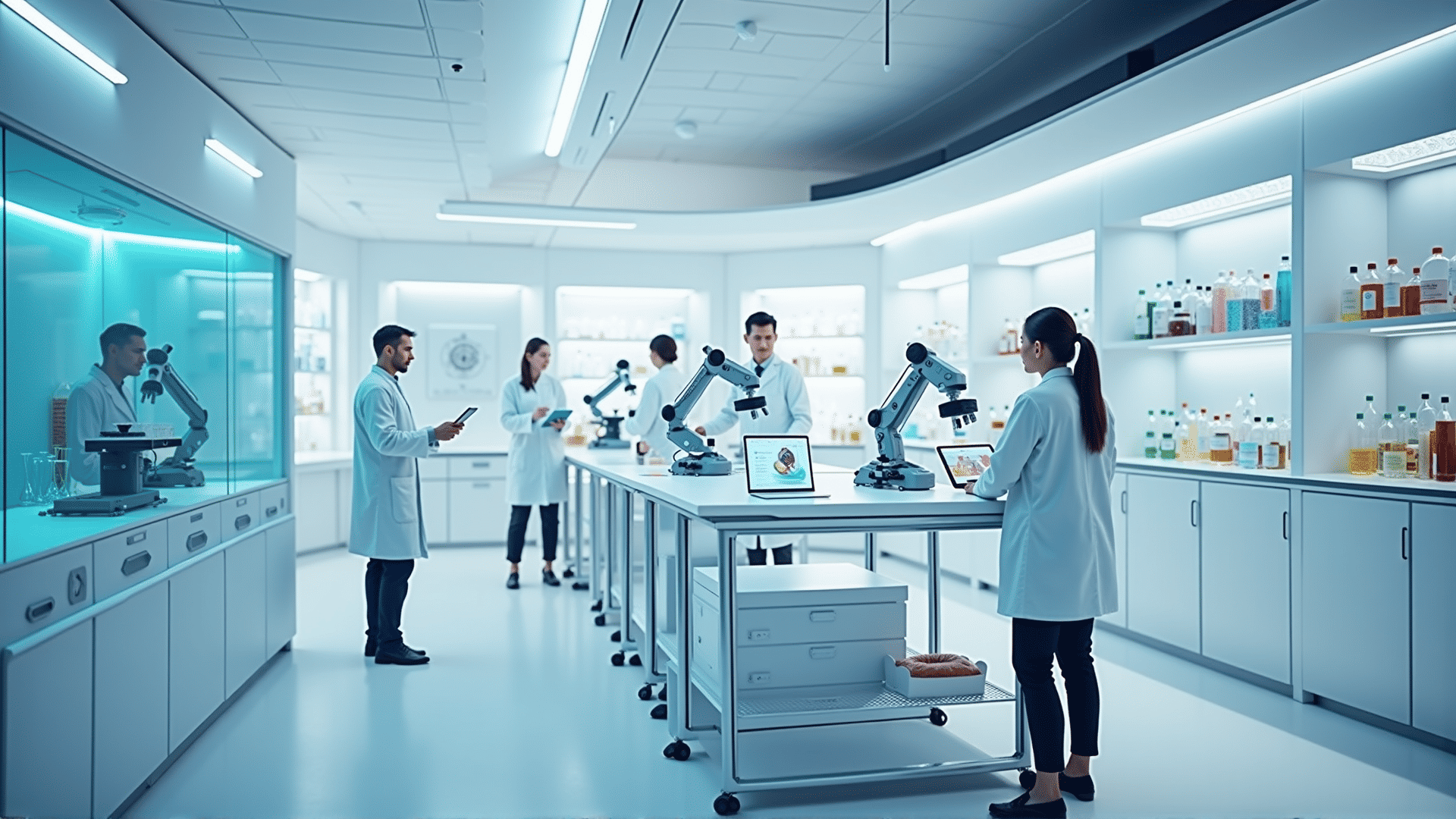
In the realm of scientific inquiry, the capabilities of a laboratory can often be the difference between groundbreaking discoveries and missed opportunities. Our cutting-edge laboratories are setting a new benchmark in the world of research by providing an environment tailored for deep scientific exploration. Equipped with the latest technology, these facilities are designed to foster innovation and drive meaningful progress across a wide array of disciplines.
Stepping into these modern laboratories, one is greeted by an atmosphere buzzing with potential. The integration of advanced technology is evident in every corner. From high-precision instruments capable of analyzing the minutest details to sophisticated computing systems designed for complex simulations, these labs are a haven for researchers aiming to push the boundaries of what is known.
The use of advanced technology spans across various scientific fields—biotechnology, nanotechnology, materials science, and environmental studies, to name a few. For instance, in the field of biotechnology, the presence of advanced genomic sequencing machines and CRISPR-cas9 technology facilitates groundbreaking research in genetics. Scientists are enabled to unravel genetic codes with unparalleled accuracy, paving the way for developments in personalized medicine and genetic therapy.
In materials science, the laboratories are equipped with high-resolution electron microscopes and atomic force microscopes. These devices allow researchers to delve into the atomic structure of materials, manipulating them at a molecular level to create super-strong, lightweight, or even self-healing materials that could revolutionize industries such as aerospace and civil engineering.
Moreover, the integration of artificial intelligence and machine learning into data analysis processes is transformative. These technologies allow scientists to sift through vast sets of data, recognizing patterns and making predictions faster than ever before. This capability is crucial in fields like climate science, where understanding complex models and datasets is imperative to address the pressing challenges posed by climate change.
A key feature of these laboratories is their interdisciplinary nature. By fostering collaboration among experts from various fields, the labs act as a melting pot of ideas. Physicists, chemists, biologists, and engineers work side by side, their collective knowledge poised to achieve discoveries unattainable by isolated efforts. This environment not only strengthens individual research but also nurtures the next generation of scientists who are adept at crossing traditional boundaries in pursuit of knowledge.
Safety and sustainability also take center stage in the design of these laboratories. With cutting-edge safety protocols and eco-friendly practices embedded into everyday operations, the labs not only protect their human and computational resources but also ensure minimal environmental impact. Energy-efficient systems, recycling initiatives, and the responsible disposal of hazardous materials underscore a commitment to sustainable research practices.
The ethos of innovation guiding these state-of-the-art laboratories is contagious. It is an invitation to the scientific community to harness these advanced capabilities and pursue endeavors that redefine what is possible. Through dedication, collaboration, and cutting-edge technology, our laboratories are not just supporting advanced scientific research—they are driving it forward, into the future, where the promise of discovery awaits.